Capabilities | Conversetional AI | Multimodal

Multimodal Voice AI Agents

Multimodal Voice AI agents combine speech and text to create natural, context-aware, and proactive interactions, transforming customer support and operational efficiency.


3CLogic Multimodal Voice AI Agents
Wellstar Health System Second Harvest Heartland Cleveland Clinic 7-Eleven Denny's Nissan Kyocera SBB CFF FFS Labcorp Hyatt Hotels Travelport Dollar General
3CLogic Voice AI Icon One Conversation. Unlimited Inputs

Introducing 3CLogic's Multimodal Voice AI Agents

3CLogic's multimodal AI agents can understand and process both spoken language and typed text inputs concurrently, delivering frictionless experiences in real time.

Multimodal Voice AI
Customer Service Example Flow

Multimodal AI Agent - John

John

Calls customer service because he has not
received his order confirmation.
3CLogic Multimodal Voice AI Agent (Customer Service)
Multimodal Voice AI Agent

Identifies caller, finds order, and
confirms phone number to activate a messaging channel.

Voice AI
WhatsApp / SMS
1

"I see your email is missing."

2

"Here is a list of your order."

3

"Lets confirm the shipping address."

4

"I've sent a summary for your review."

CRM
System of Record
CRM
System of Record
Provides context to the Multimodal AI Agent at every step.
1
Voice AI

"I see your email is missing"

2
Voice AI

"Here is a list of alternative options available."

3
Voice AI

"Lets update the shipping address you would prefer."

4
Voice AI

"I've sent a summary for your review."

Call ends
John (Customer) — Call Ends

The Multimodal Value

The limitations of traditional service channels create inherent friction in high-stakes enterprise environments. Multimodality is positioned as the solution to the specific weaknesses of standalone voice and digital platforms.

  • The Voice Constraint: While intuitive for complex problem-solving, voice is inefficient for "fine print," such as reciting email addresses or alphanumeric codes.
  • The Digital Constraint: Digital channels provide precision but often lack the conversational depth and nuance required for complex issues.
  • The Multimodal Solution: By bridging these channels, AI agents create a "high-fidelity intelligence stream" where users can speak naturally while providing precise data via digital text or visual selections.
Multimodal Capabilities and Operational Features

Deploy agents that and take action

Configure, deploy, and monitor multimodal agents in different languages across voice or chat.

Simultaneous Real-Time Processing

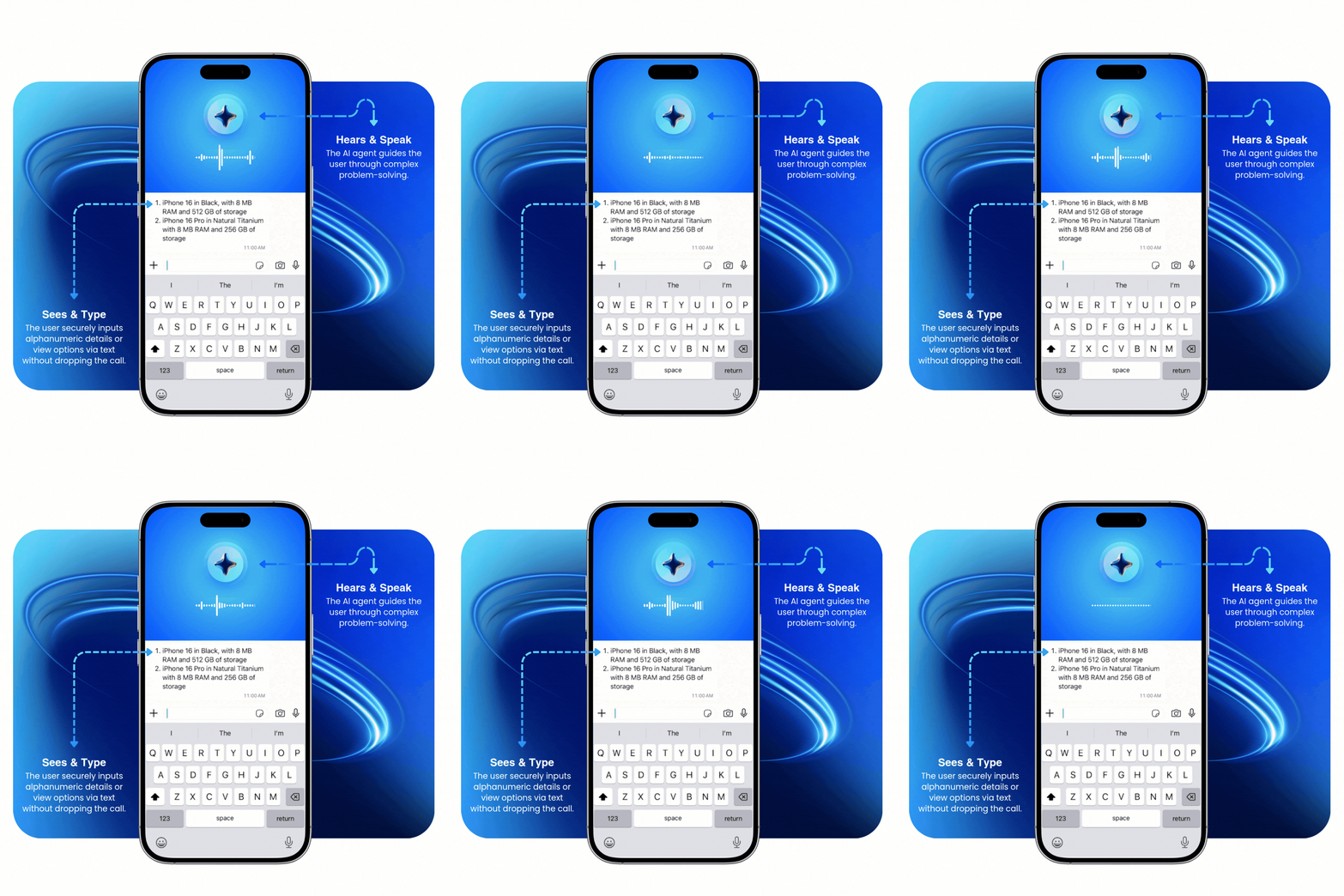
Multimodal agents process voice and digital inputs simultaneously

Unlike traditional "hand-offs" where a user must stop one interaction to start another, multimodal agents process voice and digital inputs at the same time. This allows the multimodal AI agent to verify a digital input (like a serial number, email, or list of options) while the conversation continues without interruption.
3CLogic Multimodal AI Agents | 3CLogic's multimodal AI agents can understand and process both spoken language and typed text inputs concurrently, delivering frictionless experiences in real time.
Digital Precision for Complex Inputs

Replace tedious verbal exchanges with digital accuracy

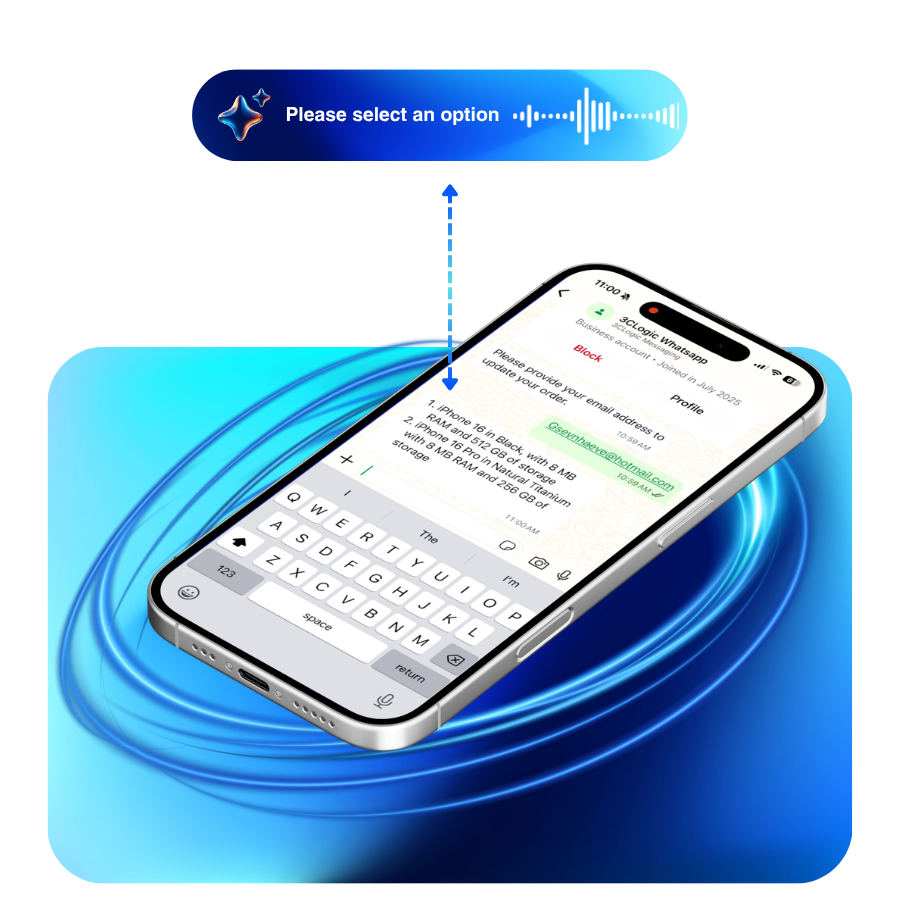
  • Alphanumeric Data: Eliminates the need for phonetic spelling (e.g., "S as in Sierra").
  • Visual Decision-Making: Instead of listening to long lists of flight alternatives or appointment slots, users view and select options directly on their screens.
  • Reduced Cognitive Load: Shifting data-heavy tasks to visual inputs simplifies the decision-making process for the user.
3CLogic Multimodal AI Agents | 3CLogic's multimodal AI agents can understand and process both spoken language and typed text inputs concurrently, delivering frictionless experiences in real time.
Natural Conversational Flow

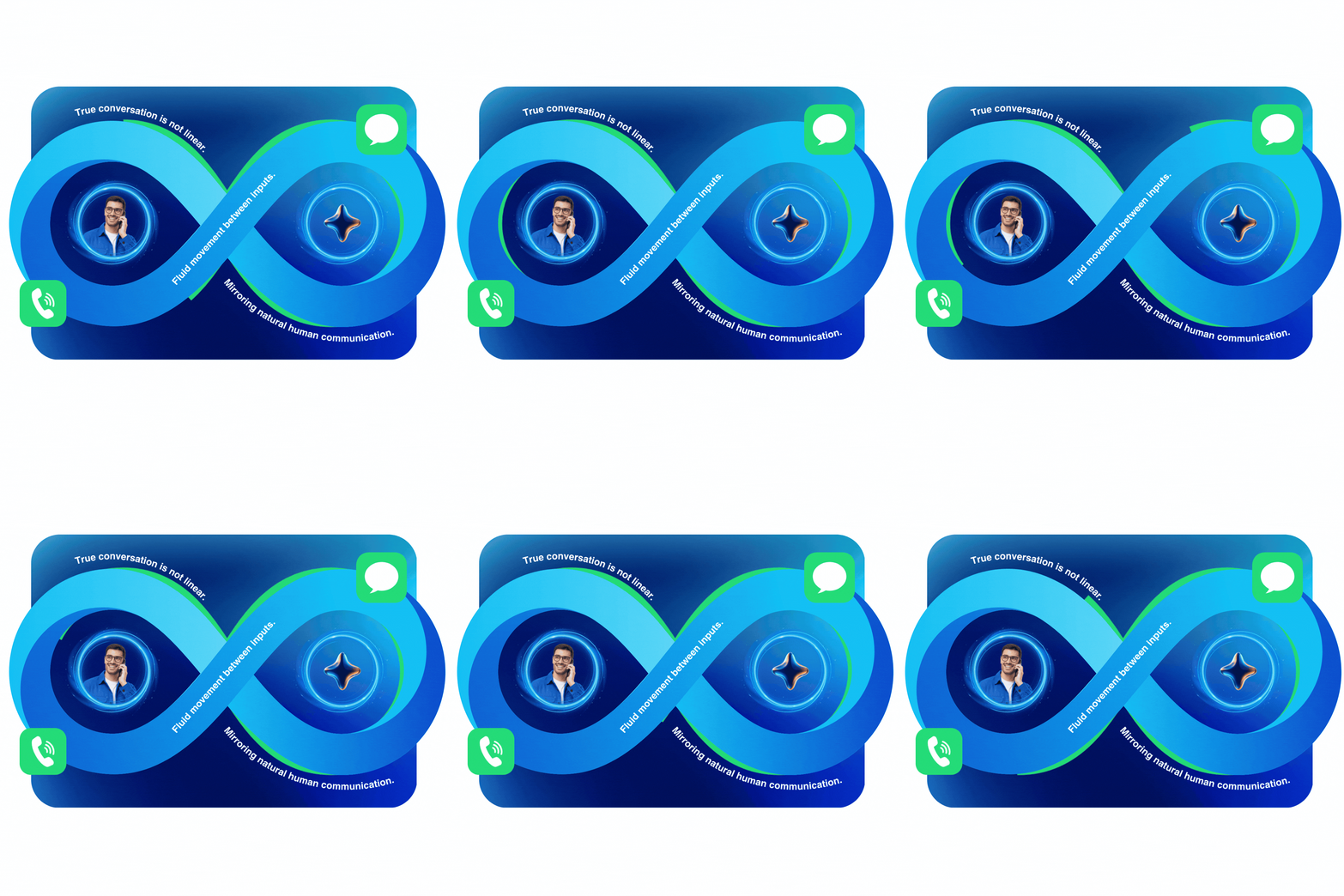
Multimodal agents mirrors natural human communication

Multimodality mirrors natural human communication, which is adaptive and non-linear. By allowing users to move fluidly between speaking and typing without losing context, the interaction feels human-centric rather than technical.
3CLogic Multimodal AI Agents| 3CLogic's multimodal AI agents can understand and process both spoken language and typed text inputs concurrently, delivering frictionless experiences in real time.
The multimodal advantage

The Business Value of Multimodal AI Agents

Implementing multimodal AI agents provides measurable advantages across operational efficiency, data integrity, and user satisfaction.

Increase interaction accuracy:

Eliminate the "downstream data rot" that plagues traditional IVRs. Ensuring 100% accuracy at the point of entry prevents costly record mismatches, misrouted tickets, and the administrative burden of manual data correction.

Enhance user experience:

Extend the situational flexibility modern users expect, all without breaking the conversational flow. By removing the constraints of a single channel, foster a more natural, human-centric interaction that builds trust and brand loyalty.

Improve task completion rates:

Reduce the cognitive load and physical effort required to share information, such as choosing a flight from a visual list rather than a spoken one, and drive higher self-service success rates. This means more resolutions in the automated layer and fewer "unnecessary" escalations to live agents.

Lower operational costs:

Reduce Average Handle Time (AHT) by enabling AI agents to "see" and "process" voice intent simultaneously. Shifting data-heavy tasks to digital inputs prevents long, repetitive verbal exchanges, allowing your enterprise to scale support capacity without proportionally increasing headcount.

Multimodal FAQs

Frequently asked questions

A multimodal experience is governed by the principle of "one conversation, unlimited inputs." Traditional channel switching is a fragmented process that forces a user to break the conversational flow—for example, hanging up to wait for an email or switching apps entirely. Multimodality eliminates this "stop-and-start" friction. By creating a dual-channel interaction, the user can talk and "show" simultaneously. This mirrors natural human communication, where visual and verbal inputs are processed in parallel, moving beyond a technical process to a fluid, high-fidelity interaction.

Voice-only channels are notorious for entry errors when capturing alphanumeric data. Users are traditionally forced into the process inefficiency of phonetic spelling (e.g., "S as in Sierra" or "B as in Bravo"), yet even this fails to ensure 100% accuracy. Multimodal agents eliminate this by allowing users to type alphanumeric details directly into a digital interface—via SMS or WhatsApp—while the conversation persists. This ensures the AI captures the data perfectly the first time, providing a clean, accurate data stream and eliminating the need for frustrating verbal repetitions.

Listening to verbal lists—such as flight alternatives, appointment slots, or product options—imposes a heavy cognitive load that often leads to user abandonment. Multimodality replaces these tedious verbal exchanges with visual decision-making. By pushing complex options to a user’s screen, the interaction is transformed into a visual process where the best choice is seen rather than heard. This reduces the physical and mental effort required from the user, significantly accelerating the path to resolution.
 
By aligning technical functionality with the reality of human behavior, these mechanics ensure that the transition between talking and typing is invisible, directly driving superior business outcomes.

"Downstream data rot" is the compounding cost of inaccurate data entry. When a traditional IVR or voice agent misidentifies a record, it triggers a chain of misrouted tickets, record mismatches, and an expensive administrative burden of manual correction. Multimodal AI prevents this rot by capturing data digitally at the point of entry. Ensuring 100% accuracy as data flows into enterprise platforms prevents the ripple effect of errors, safeguarding long-term data integrity and reducing administrative rework.

Multimodality directly reduces AHT by allowing AI agents to "see" and "process" voice intent simultaneously. Inefficiencies caused by long, repetitive verbal exchanges for data-heavy tasks—such as reciting VIN numbers or shipping addresses—are eliminated. By shifting these tasks to digital inputs, the resolution speed increases. This allows the enterprise to scale support capacity and handle higher volumes of complex interactions without a proportional increase in headcount.

The primary enemies of self-service ROI are cognitive load and forced escalations. By enabling visual decision-making, multimodality significantly drives higher task completion within the automated layer. When users can see their options, the likelihood of abandonment decreases. This results in higher self-service success rates and a significant reduction in "unnecessary" escalations, allowing live agents to focus on high-value tasks that require human intervention.

In an environment of automated frustration, situational flexibility is a strategic differentiator. By providing a human-centric interaction that adapts to the user's needs, enterprises build trust. The fluidity of a system that allows a user to move between voice and digital inputs without losing context creates a frictionless experience. This conversational ease strengthens the relationship between the brand and the user by prioritizing their convenience.
 
Multimodality is the architectural key to unlocking frictionless enterprise service, ensuring that every interaction is as precise as it is conversational.


Get in touch

Experience the modern cloud contact center platform for every industry. Are you ready to find out more?

Support inquiries

support@3clogic.com

Service desk

800-350-8656

Let's Talk!